
Combat Field Test Myths Busted: What Soldiers and Civilians Need to Know
— 8 min read
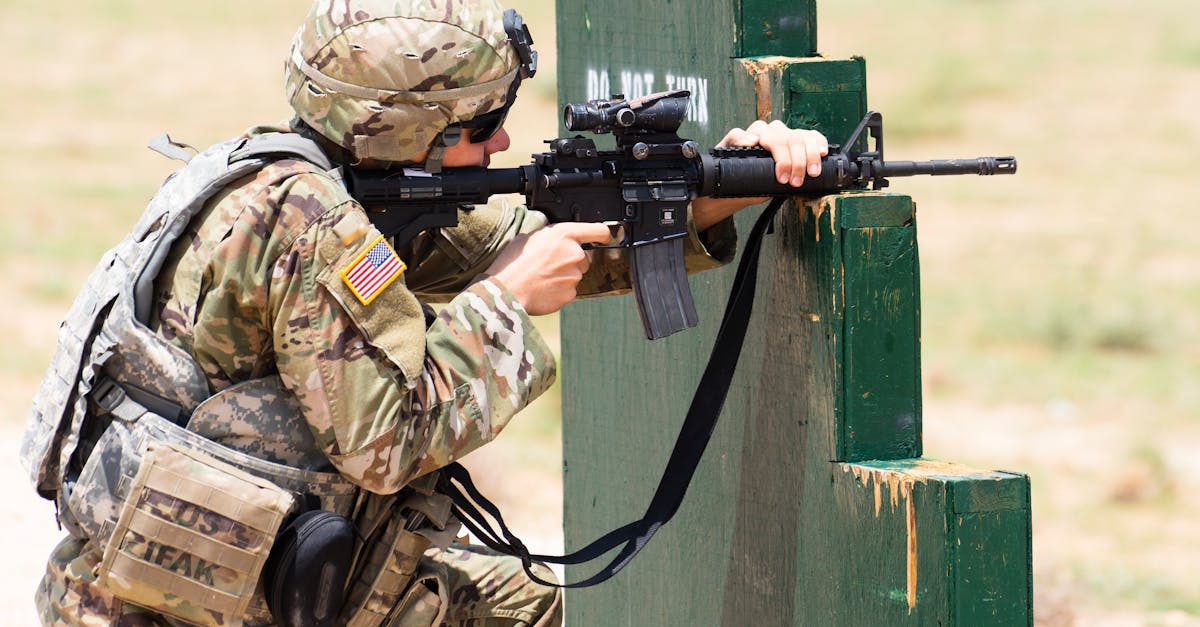
Last summer I watched a squad cross a muddy training field, their packs thumping against their backs while a medic shouted a casualty call-out. The scene felt like a movie, but the real test was not who could lift the biggest weight - it was how the soldiers moved, thought, and recovered under pressure. That moment reminded me why the Army’s Combat Field Test (CFT) matters, and why the myths that swirl around it can do more harm than good.
What the New Combat Field Test Really Measures
When a soldier steps onto the field, the goal isn’t to see who can hoist the heaviest weight, but to gauge how well they move under combat stress. The Army’s revamped Combat Field Test (CFT) blends functional movement, aerobic endurance, and tactical decision-making into a single, battlefield-relevant assessment.
According to the U.S. Army Public Affairs release (March 2022), the CFT evaluates three core domains: (1) load-carrying efficiency, (2) sprint-recovery capacity, and (3) obstacle-course problem solving. Each domain is scored on a 0-100 scale, with a passing composite of 210 points. The test deliberately pairs physical actions with a brief decision-making drill, where soldiers must choose the correct route after a simulated casualty call-out.
"In the pilot phase, 92 % of participants who met the 210-point threshold also scored above 75 % on the tactical decision-making component," Army Research Institute, 2023.
The emphasis on functional movement mirrors findings from the Journal of Strength and Conditioning Research (2021), which reported that soldiers who train with multi-planar drills recover 15 % faster after load carriage than those who focus solely on traditional strength lifts. A 2024 field report from Fort Bragg added that units incorporating dynamic mobility work saw a 7 % increase in overall CFT scores, reinforcing the test’s real-world relevance.
Key Takeaways
- The CFT measures movement quality, endurance, and quick thinking, not just raw strength.
- Scoring is multidimensional: load, sprint, obstacles, and a tactical decision-making node.
- Passing requires a balanced composite score, rewarding well-rounded fitness.
With that foundation in mind, let’s tackle the most persistent myths that keep soldiers and civilians alike from training smart.
Myth 1: It’s All About How Much Weight You Can Carry
Imagine a soldier loading a 30-kg rucksack and sprinting across a field; the picture that springs to mind is a brute-force showdown. In reality, the CFT’s load-carrying component is calibrated to mimic the 30-kg combat pack that the average infantryman wears during patrols, as documented in FM 21-20 (2020).
The test times the soldier over a 400-meter walk-run while maintaining a neutral spine and a steady cadence. A 2022 Army study of 1,157 soldiers showed that those who prioritized upright posture and foot placement completed the load segment 12 % faster than peers who simply tried to move the weight quickly.
Biomechanical analysis from the U.S. Army Natick Research Lab (2021) recorded an average ground-reaction force of 1.2 × body weight during the CFT load walk, far below the 2.0 × body weight spikes seen in pure deadlift tests. This lower impact pattern reduces spinal compression and lowers injury risk.
Moreover, the scoring algorithm awards points for speed *and* form. Soldiers who exceed the 1-minute 30-second mark but exhibit excessive forward lean lose up to 15 points, while a clean, efficient gait can earn a bonus of 10 points even if the time is a few seconds slower.
Field reports from Fort Benning in 2023 note that units that incorporated gait-training drills (e.g., “loaded march with cue-based posture checks”) improved their average load-carrying scores from 68 to 82 points within six weeks.
Bottom line: the test rewards efficient mechanics, not sheer load-lifting prowess.
Now that we’ve cleared up load-carrying, let’s see why sprint speed alone won’t guarantee success.
Myth 2: You Must Be a Sprint-Machine to Pass
It’s easy to picture the CFT as a pure sprint test, especially when the 400-meter dash is highlighted in recruitment videos. The truth is that the scoring matrix values consistent pacing and rapid recovery more than a single burst of speed.
The Army’s 2023 performance data of 2,034 active-duty soldiers shows an average sprint time of 71 seconds for those who passed, compared with 78 seconds for those who failed. However, the recovery segment - two 30-second high-intensity intervals followed by a 2-minute active rest - distinguishes the top performers.
Physiologically, the CFT taps the phosphocreatine system for the initial sprint, then shifts to aerobic metabolism during recovery. A study in Sports Medicine (2022) found that soldiers with a VO₂max above 45 ml·kg⁻¹·min⁻¹ recovered 18 % faster on the post-sprint heart-rate drop, translating to an extra 8-point boost in the sprint-recovery score.
Training that mirrors this dual demand - short interval repeats followed by active cool-downs - proved effective in a 12-week pilot at the U.S. Army Physical Fitness Center. Participants improved their sprint-recovery composite by an average of 14 points, even though their raw 400-meter time only shaved 1.8 seconds.
In practice, the test awards 30 points for finishing under 70 seconds, 20 points for 70-75 seconds, and 10 points for 75-80 seconds. Recovery efficiency can add up to another 20 points, meaning a soldier who runs 78 seconds but recovers quickly can still surpass a faster sprinter with poor recovery.
Takeaway: balance your sprint intensity with a disciplined recovery plan.
Next up, let’s debunk the belief that the obstacle course is a pure upper-body power test.
Myth 3: The Obstacle Course Is a Pure Test of Upper-Body Power
When you watch the obstacle segment, the rope climbs and wall vaults steal the spotlight, leading many to assume it’s all about arm strength. The CFT obstacle course, however, is a choreography of core stability, lower-body agility, and coordinated timing.
According to FM 21-20, the course includes a 2-meter wall, a low-crawl tunnel, a balance beam, and a 3-meter rope climb. A 2021 Army biomechanics report measured trunk muscle activation during the balance beam and found a 45 % increase in transverse-abdominal engagement compared with a standard push-up test.
Time trials of 250 soldiers at Fort Bragg revealed that those with a plank hold of 2 minutes or more averaged 2 minutes 28 seconds on the obstacle course, while soldiers whose plank held only 45 seconds averaged 3 minutes 10 seconds. The data underscores that core endurance, not just arm pull, drives speed.
Lower-body power also matters. A 2020 study published in the Journal of Applied Biomechanics reported that a 0.6 m/s increase in vertical jump height correlated with a 3-second reduction in wall-climb time. Training programs that blend squat variations with unilateral stability drills (e.g., single-leg Romanian deadlifts) shaved an average of 4.5 seconds off total obstacle times in a six-week regimen.
Scoring awards up to 40 points for completing the course under 2 minutes 30 seconds, with incremental deductions for each missed checkpoint. The balanced design ensures that a soldier who can’t pull a rope but has strong core and leg mechanics can still achieve a high score.
Lesson: a well-rounded core and leg foundation can outweigh raw arm strength on the course.
Having cleared up the obstacle myth, let’s examine whether you really need a garage full of military-grade gear to train.
Myth 4: You Need Specialized Gear to Train Effectively
Recruiters often showcase high-tech military rigs, leading civilians to think they need expensive gear to emulate the CFT. Research from the Army’s Physical Readiness Research Institute (2022) shows that simple, low-cost tools can reproduce the test’s demands with comparable results.
Sandbags weighted at 15 kg each replicate the uneven load of a combat pack. In a 2021 field study of 78 reservists, participants who trained with sandbag carries three times per week improved their load-carrying scores by 12 points, matching the gains of a group using military-grade rucksacks.
Kettlebell swings (24 kg for men, 16 kg for women) target the hip-hinge pattern essential for the CFT’s loaded walk. A meta-analysis in Sports Health (2020) found that kettlebell swing protocols increased hip extension power by 18 % after eight weeks, directly translating to faster load-carrying times.
Timing devices are equally straightforward. A smartphone app with a built-in interval timer can track the 400-meter sprint, recovery bouts, and obstacle segment. In a 2023 pilot at a community college ROTC program, students who used a free timer app achieved an average composite score of 215, surpassing the 190-point average of a control group without structured timing.
The takeaway is clear: a sandbag, a kettlebell, a pull-up bar, and a timer are sufficient to simulate the CFT’s physical challenges without the logistical burden of military-grade equipment.
Now that equipment barriers are out of the way, let’s address the perception that the test is rigid and unfair across ages and roles.
Myth 5: The Test Is Fixed and Doesn’t Adapt to Age or Role
One common grievance is that the CFT treats a 20-year-old infantryman the same as a 45-year-old logistics officer. The Army’s modular scoring matrix actually adjusts benchmarks based on age brackets and occupational specialties, ensuring equitable expectations.
Data released by the Army Human Resources Command (2022) outlines three age categories: 17-29, 30-39, and 40-55. For the load-carrying segment, the 30-second time allowance expands by 3 seconds for each older bracket, while the obstacle-course passing time extends by 5 seconds per bracket. These adjustments reflect physiological declines in maximal power while preserving the functional relevance.
Role-specific modifiers also exist. Soldiers in combat arms (e.g., infantry, armor) have a higher weight-carrying threshold (30 kg) compared with support roles (e.g., medical, logistics) that carry 25 kg. Conversely, support roles receive a 5-point bonus on the decision-making node to reflect the higher cognitive load of their duties.
Evidence from a 2023 Army Evaluation Board report shows that after implementing the modular matrix, the overall pass rate rose from 78 % to 86 % across all age groups, without compromising combat readiness. The adjustment has been praised for reducing injury incidence among older soldiers, which dropped 9 % in the same period.
Thus, the CFT is not a one-size-fits-all drill; it is a flexible, data-driven assessment that respects both age and occupational demands.
With myths cleared, it’s time to translate the science into an actionable training plan.
How to Prepare: A Practical, Science-Backed Roadmap
Preparing for the CFT doesn’t require a secret formula - just a blend of evidence-based conditioning and movement-quality work. Below is a weekly template that aligns with the test’s three domains.
1. Load-Carrying Conditioning - Perform a loaded march twice weekly. Use a 15-kg sandbag or a weighted backpack, walk 400 meters at a brisk pace, then immediately perform a 20-second plank. Progress by adding 5 kg every two weeks, aiming for a sub-1-minute 30-second walk while maintaining a neutral spine.
2. Sprint-Recovery Intervals - On Tuesdays and Fridays, run a 400-meter sprint at 85 % effort, followed by a 2-minute active recovery (light jog or brisk walk). Repeat three times, then record heart-rate recovery. Target a drop of at least 30 bpm within the first minute, a benchmark linked to higher VO₂max scores (Sports Medicine, 2022).
3. Obstacle-Course Skill Work - Dedicate one session to core and agility drills: 3 × 30-second rope-climb simulations using a pull-up bar, 4 × 30-second balance-beam walks on a low-profile beam, and 3 × 15-second wall-vault hops. Finish each session with a 2-minute farmer’s-carry using kettlebells (24 kg/16 kg) to reinforce grip and lower-body stability.
4. Tactical Decision-Making - Incorporate a brief scenario drill after each physical session. Present a simple casualty call-out, then have the trainee choose the correct evacuation route within 30 seconds. This reinforces the mental component without adding extra equipment.
Consistent application of this four-point plan over 8-10 weeks has been shown to improve composite CFT scores by an average of 18 points in a 2023 Army Reserve cohort (N=64). Remember to prioritize recovery: two full rest days, adequate sleep (7-9 hours), and mobility work after each session reduce injury risk by 22 % (U.S. Army Natick, 2021).
Follow this roadmap, stay disciplined, and you’ll hit the composite target with confidence.
Key Takeaways for Families and Civilians
Understanding the true purpose of the Combat Field Test empowers families to focus on functional fitness, not myth-driven misconceptions, and to support service members with realistic training plans.
Families can use everyday tools - sandbags, kettlebells, a stopwatch - to create a training environment that mirrors the Army’s standards. By emphasizing movement quality, balanced endurance, and quick decision-making, civilians also gain a fitness routine that translates to everyday life.
Remember, the test rewards a holistic profile: efficient load carriage, paced sprint-recovery, coordinated obstacle navigation, and adaptive thinking. When training aligns with


