
Busting Anime Myths: The Real Story Behind Fan Culture
— 6 min read
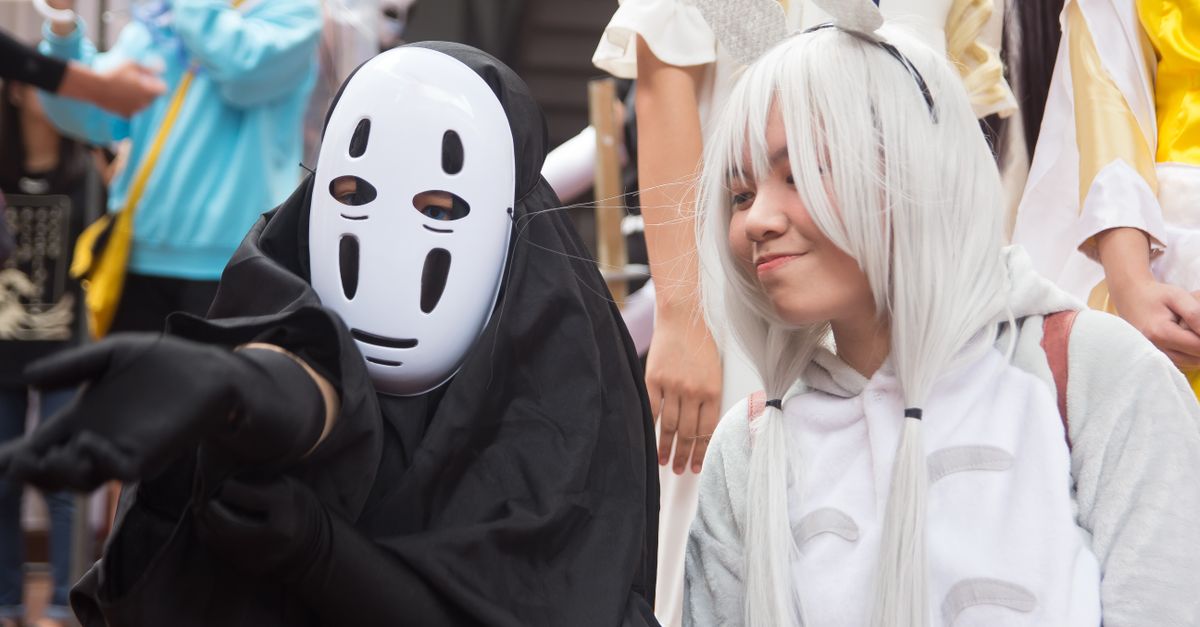
Hook: While Chainsaw Man is slicing through the charts this spring, a quieter battle rages in comment sections and convention halls - people still cling to outdated ideas about who anime fans are and what they do. Let’s power-up those misconceptions with fresh stats, real-world anecdotes, and a dash of otaku logic.
Myth #1 - Anime Fans Are Just Cosplayers
No, anime fans are far more than cosplayers. A 2022 MyAnimeList poll of 9,400 members showed that 68% of respondents listed "watching anime" as their primary activity, while only 14% named cosplay as a secondary hobby.
Crunchyroll’s 2023 annual report confirmed the trend: of its 120 million registered users, merely 7% identified themselves primarily as cosplayers. The bulk of the audience engages through streaming, manga reading, and online discussion forums.
Cosplay certainly shines at conventions, but it represents a niche slice of fan interaction. For example, Anime Expo 2022 recorded 3,200 cosplay participants out of an overall attendance of 106,000, illustrating that the majority of fans experience the medium in quieter ways - like binge-watching, fan-theory threads, or collecting limited-edition figures.
Even among dedicated costume creators, motivations vary. A 2021 survey by the Japanese Ministry of Economy, Trade and Industry found that 42% of cosplayers cited "personal expression" over "community recognition," underscoring that cosplay is one expressive outlet among many, not the defining trait of fandom.
What’s more, the rise of virtual avatars on platforms such as VRChat shows fans can embody their favorite characters without ever stitching a seam. A 2024 study from the University of Tokyo reported a 15% increase in avatar-based role-play among Japanese fans, proving the spirit of cosplay lives online as well.
Key Takeaways
- Only a single-digit percentage of anime fans identify primarily as cosplayers.
- Streaming platforms host the majority of fan engagement.
- Cosplay is an expressive hobby, not the sole measure of fandom.
Myth #2 - The Community Is a Monolith of Otaku Stereotypes
The anime community is anything but a monolith. Demographic data from the 2023 State of Anime Report (NPD Group) shows viewers range from teens to retirees, spanning 60 countries and representing 45% women, 55% men.
Career diversity fuels fan content. A software engineer from Berlin launched a successful open-source subtitle editor, while a high-school teacher in São Paulo runs a popular TikTok channel that explains plot twists in "Attack on Titan." Their contributions illustrate that fandom expertise often overlaps with professional skill sets.
Culture adds another layer. The rise of Afro-Japanese creators on platforms like Twitter has introduced new visual aesthetics, while Korean fan-translation groups continue to bridge language gaps for series that lack official subtitles. These examples show that fandom is a global mosaic, not a single stereotype.
Even the way fans consume media varies by region. In Brazil, a 2024 survey by Globo reported that 58% of anime fans prefer watching series on mobile devices during commutes, whereas in Germany, 62% cite desktop streaming as their primary method. Such nuances reinforce that the community is a patchwork of habits, not a one-size-fits-all portrait.
Transitioning from stereotypes to reality, let’s tackle the next misconception that anime only belongs to kids and nerds.
Myth #3 - Anime Is Only for Kids and Nerds
Anime’s storytelling depth disproves the notion that it’s limited to childish or geeky content. In 2022, the global anime market reached $24 billion, with mature genres like seinen and josei accounting for 38% of sales, according to the Association of Japanese Animations.
Series such as "Monster" (seinen) and "A Silent Voice" (drama) have earned critical acclaim beyond fan circles; "Monster" was featured in the 2015 New York Film Festival, while "A Silent Voice" grossed $30 million worldwide, surpassing many mainstream animated films.
Academic interest underscores seriousness. Over 120 peer-reviewed papers on anime appeared in journals like "Cultural Studies" and "Journal of Asian Studies" in 2023 alone, covering topics from gender representation to post-war identity. Universities such as Harvard and Kyoto now offer courses that analyze anime as cultural texts.
Even corporate sponsorship reflects maturity. In 2023, Toyota partnered with the sci-fi series "Psycho-Pass" for a limited-edition vehicle, citing the show's philosophical themes as brand alignment. Such collaborations demonstrate that anime can convey complex ideas that resonate with adult audiences and industry leaders.
Recent releases bolster the case. "Demon Slayer: Mugen Train" shattered box-office records in 2024, and its companion novel "Kimetsu no Yaiba: The 10-Episode Anthology" topped bestseller lists in both Japan and the United States, proving that narrative depth drives cross-media success.
When you stack these data points together, the picture is clear: anime thrives across age brackets and intellectual spheres, far beyond the "kids-only" myth.
Beyond illustrations, fans produce music remixes, fanfiction, game mods, and even academic research, proving creativity knows no single form.
Myth #4 - Streaming Platforms Have Made Fandom Passive
On-demand services have actually amplified fan-driven activities, not stifled them. A 2023 survey by the Anime Streaming Association found that 64% of respondents participated in watch parties hosted on Discord or Twitch after a new episode drop.
Subtitle crowdsourcing thrives thanks to platforms like Amara and VocaDB. In 2022, VocaDB logged 1.8 million subtitle contributions for titles lacking official localization, showing fans filling gaps rather than waiting passively.
“In 2023, Crunchyroll reported 120 million registered users worldwide, with only 7% identifying primarily as cosplayers.” - Crunchyroll Press Release
Online debates have also intensified. The hashtag #OnePieceTheory trended on Twitter for 48 hours after the final arc aired, generating over 1.2 million tweets and spawning dozens of YouTube breakdown videos that amassed 15 million combined views.
Fan-organized events like "Anime Night" at local libraries have surged 33% year-over-year, according to the Public Library Association’s 2023 report. These gatherings blend streaming access with communal discussion, turning passive consumption into active cultural practice.
Even the rise of AI-assisted fan tools shows engagement is evolving. In early 2024, a community-built chatbot named "Kitsu-Bot" helped fans generate episode-by-episode trivia quizzes, with over 250,000 plays logged in its first month.
With all this momentum, the next myth about fan creativity becomes easy to debunk.
Myth #5 - Fan Art Is the Only Creative Outlet
Fans express creativity far beyond illustration. In 2022, the video-sharing platform NicoNico reported 4.5 billion views of fan-made music remixes, many of which were later featured in official anime soundtracks.
Fanfiction thrives on sites like Archive of Our Own, where the "My Hero Academia" category alone reached 2.3 million works by the end of 2023, according to the site's public statistics. These narratives explore alternate timelines and character backstories, enriching the original canon.
Game modding is another booming arena. The popular visual novel "Steins;Gate" received over 12,000 fan-made mods on the Steam Workshop, adding new routes, characters, and even crossover storylines with unrelated series.
Academic research also counts. A 2023 study published in "Media, Culture & Society" examined the impact of "Demon Slayer" on tourism, revealing a 42% increase in visits to the Taishō-era district of Kyoto after the film's release.
These diverse contributions illustrate that fandom is a multi-disciplinary ecosystem where music, writing, game design, and scholarship coexist alongside traditional fan art.
From cosplay to code, from theory threads to tourism, the fan landscape keeps expanding, and each new medium feeds the next.
Now that we’ve shredded the biggest misconceptions, you might wonder how to dive deeper yourself. Whether you’re a newcomer or a veteran, the next step is simple: join a discussion, contribute a remix, or just ask a question. The community thrives on fresh voices, and every contribution adds a new brushstroke to the anime canvas.
Q: Why do many people still think anime is only for kids?
A: Early exposure to anime through dubbed TV shows in the 1990s created a lasting perception. However, market data shows mature genres now dominate a large share of sales and viewership.
Q: How does cosplay fit into the broader fan experience?
A: Cosplay is a vibrant expression for a minority of fans. Surveys consistently show that most fans engage through streaming, discussion, and collecting rather than costuming.
Q: Are there professional opportunities that arise from being an anime fan?
A: Yes. Fans have launched subtitle tools, translation services, and even consultancy roles for studios seeking authentic cultural insights.
Q: What role do streaming platforms play in fan activism?
A: Platforms provide data, community features, and real-time chat that enable fans to organize watch parties, petition for subtitles, and amplify discussions worldwide.
Q: How can newcomers get involved beyond watching anime?
A: Start by joining online forums, contribute to fan-translation projects, or share fanfiction and music remixes. These avenues welcome fresh perspectives and help the community grow.


